

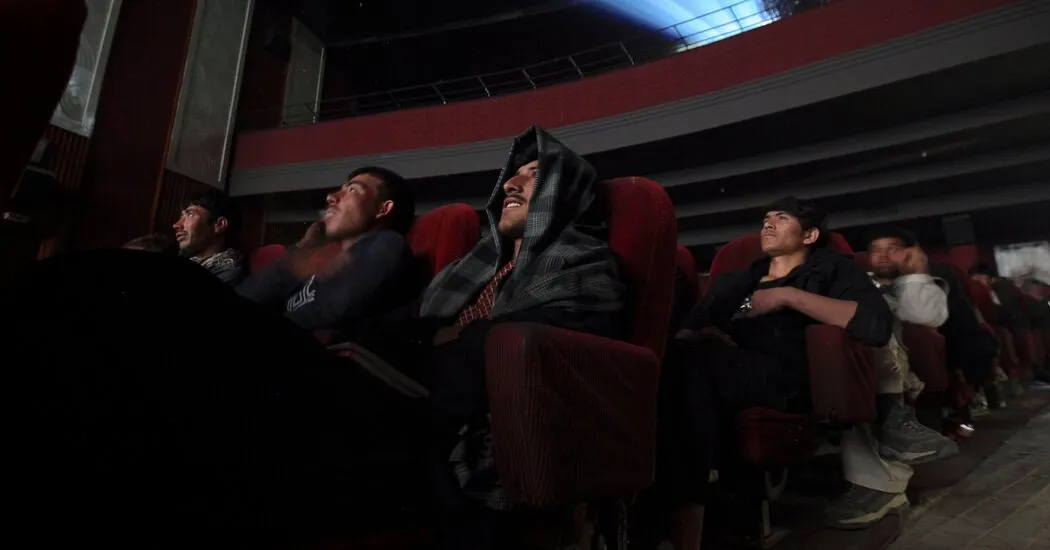
An iconic Kabul cinema is demolished by the Taliban
A cinema that witnessed Afghanistan's modern history—from the cosmopolitan vitality of the 1960s to the silencing and repression that followed not one, but two Taliban takeovers—has been demolished to make way for a shopping mall.
The Ariana Cinema in Kabul, the capital, had been closed, except for showing occasional propaganda films, since 2021, when the Taliban returned to power. But it remained a landmark in the city center, a reminder of art, culture and pleasure for many Afghans.
An excavator began collapsing the building last week. Eventually, a $3.5 million shopping center, designed to house more than 300 shops, restaurants, a hotel and a mosque on eight floors, will rise in its place, said Nematullah Barakzai, spokesman for Kabul municipality.
The destruction of the theater is a sign of the ideological and economic priorities of the Taliban government, which is desperately seeking new sources of financing due to Western sanctions and the loss of aid
Although Afghanistan's economy grew 4.3 percent this year, according to the World Bank, per capita is shrinking because returning refugees have swelled the population. However, the newcomers have helped fuel a construction boom, which the Taliban are trying to take advantage of by selling land for projects that can generate income.
Barakzai said the cinema's equipment and archives would be stored securely and could be reused. “Since there are currently no active cinemas in the country, we cannot leave this building unused,” he said.
But the flurry of restrictions imposed by the Taliban in recent years indicates that such a revival is unlikely to occur as long as they rule the country.
The Taliban have banned domestic television channels from broadcasting foreign series and, more recently, from showing any images of living beings, a strict interpretation of Islamic law that prohibits the depiction of humans and animals. Authorities have also ordered Afghans to stop uploading videos to platforms such as YouTube. The city's other old cinemas remain closed.
Earlier this month, officers from the Taliban's vice and virtue department detained four young men in the western city of Herat because they had dressed up as characters from the British television drama Peaky Blinders. Authorities accused them of promoting Western values with their attire.
The Ariana Cinema opened its doors in the early 1960s and became a favorite place for Afghans who wanted to watch Indian Bollywood films or Iranian cinema. Kabul was then known as “the Paris of Central Asia” and attracted all types of visitors, from hippies to tourists from neighboring countries. Kabul's well-to-do urban elite frequented the Intercontinental Hotel, a landmark hilltop building that opened in 1969 and became famous for its haute cuisine and lavish parties.
During the civil war of the 1990s, the cinema was severely damaged. During the first period of Taliban rule, from 1996 to 2001, it remained closed.
He said he tried to go once a week. “At that time, the price of a movie ticket was equivalent to six or eight pieces of dry bread, and I really shouldn't have spent that money on going to see movies,” said Jabarkhel, 38. “But the interest and desire to go to the cinema lived in my heart.”
Basir Mujahid, a renowned Afghan actor and director, said that the Ariana Cinema embodied one of the last signs of that hopeful time in Kabul. In 2018, when the Taliban and the U.S.-backed government agreed to a ceasefire during the celebration of Eid al Adha (the “Feast of Sacrifice”), many Taliban fighters went to the cinema with the group's flags and weapons to watch one of their films, he said.
“We were very happy that maybe they valued art and culture, but unfortunately that was not the case,” Mujahid said. When the Taliban regained power, the cinema closed again.
“The destruction of the Ariana Cinema is not simply a construction operation, but rather the end of an era in the cultural life of the Afghan capital,” he added.
Although its devotees consider the Ariana a symbol of Afghanistan's modern cultural history, Barakzai, spokesman for the Kabul municipality, argued that, as it is a business, the building cannot be considered historically significant.
“Even when it operated as a movie theater, it was a commercial place because tickets were sold there,” he said. Under a 12-year contract, the city will own 45 percent of the shares in the new project, with the remainder held by a private company, he said. Construction is expected to last approximately a year.
Elian Peltier is an international correspondent for The Times, covering Afghanistan and Pakistan.