

She Tracked Fish That Coastal Communities Depend On. Then She Was Fired From NOAA.
Interview by Austyn Gaffney
Lost Science is an ongoing series of accounts from scientists who have lost their jobs or funding after cuts by the Trump administration. The conversations have been edited for clarity and length. Here’s why we’re doing this.
Ana Vaz: I worked for the National Oceanic and Atmospheric Administration’s Southeast Fisheries Science Center, headquartered in Miami. We studied fish populations in the Gulf of Mexico, the southern Atlantic Ocean and the Caribbean Sea, where local communities have fished for fun and for profit for centuries.
I studied how environmental changes, like warming oceans, impact fish, which eventually impact the people that rely on those fish.
This work matters because, as climate change gets worse, these fish will be increasingly under threat. But in April, I was fired from NOAA because I was a probationary employee.
One of my main projects for NOAA was looking at what is driving the failure of recruitment of snapper and grouper in the southern Atlantic. So, from coastal Florida to North Carolina. Their populations are showing declines. In the last decade, there’s less recruitment happening for the species, which means fewer juveniles join adult populations, so fewer new fish enter the population.
After going over a lot of data, we really think this is happening because of environmental changes. Basically, we’re looking at the future. Our research helps determine the stock levels fishermen might see in the future.
Another thing I was proud of was working with the queen conch. It went through a status review as part of the Endangered Species Act, and it’s a monumental task to look over all the information. The group recommended changing the queen conch’s status to threatened, meaning it faced the threat of endangerment in the foreseeable future. They’re herbivores, so they help with the health of the environment because they eat algae and help control algal growth.
But they’re also very important economically and culturally since Indigenous communities fish conch and it’s still very much a part of their livelihood and Caribbean culture.
A lot of the work we were doing incorporates environmental variability and stock assessment. If you don’t have someone really doing it with dedicated time and knowledge of both oceanography and biology, it’s very difficult.
We have qualified colleagues who can do some of the work I was doing, but they’re picking up the pieces of what we were trying to do. Between probationary firings and early retirement, we lost about 60 out of 200 people. The knowledge that is being lost, how can we recover from that?
It’s so hurtful because communities still need that work. I kind of want to cry. It’s not like the fish will stop moving to new areas or oceans are going to stop warming or the problems will disappear. It’s that we’re not here to help manage these changes and give alternatives to their communities.
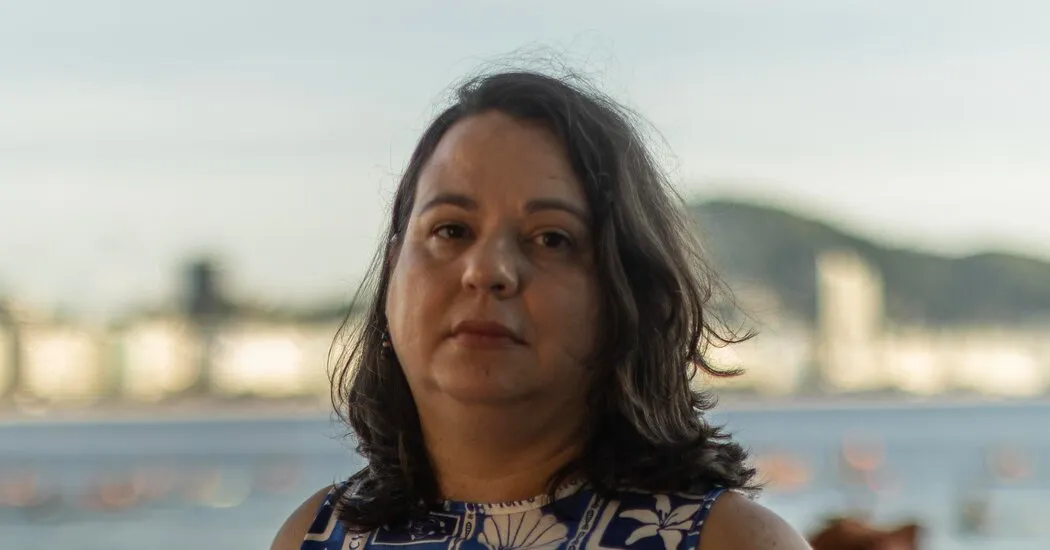
Ana Vaz was a fish biologist at NOAA’s Southeast Fisheries Science Center. She has a Ph.D. in oceanography from the University of Hawaii at Manoa. After joining NOAA in 2024, she was fired as a probationary employee in April 2025. She now lives in Brazil and works for the country’s National Institute for Oceanographic Research as a science analyst.
More Lost Science

MALARIA AND MOSQUITOES

PHYSICS AND MEASUREMENT

CHILDREN AND POLLUTION

EARLY WARNINGS
DOG COGNITION
GENETICS AND BIRDS

TSUNAMI WARNINGS

POLLUTION AND FERTILITY

SPACECRAFT ENGINEERING

EMISSIONS AND HEAT

FIRES AND BEES
