

The US promises $2 billion in humanitarian aid to the UN
GENEVA (AP) — The United States on Monday announced a $2 billion commitment to U.N. humanitarian aid, as President Donald Trump's administration continues to reduce U.S. assistance abroad and warns U.N. agencies that they must “adapt, shrink, or die” in a time of new financial realities.
That amount is a small fraction of what Washington has contributed in the past, but reflects what the administration believes is a generous figure that will maintain state status. United as the world's largest donor for humanitarian purposes.
“This new model will better share the burden of the UN's humanitarian work with other developed countries and will require the UN to eliminate excess, eliminate duplication and commit to powerful new impact, accountability and oversight mechanisms,” Secretary of State Marco Rubio said on social media.
The pledge creates a general fund from which money will be distributed to individual agencies and priorities, a key part of the White House's demands for sweeping changes across the world body, which have alarmed many aid workers and led to sharp reductions in programs and services.
The $2 billion is only a small part of traditional U.S. humanitarian funding for U.N.-backed programs, which has reached up to $17 billion annually in recent years, according to United Nations data. U.S. officials say only $8 billion to $10 billion of that has been voluntary contributions. Washington also pays billions in annual dues related to its UN membership.
“The piggy bank is not open to organizations that just want to go back to the old system,” Jeremy Lewin, the State Department official in charge of foreign assistance, said at a news conference Monday in Geneva. “President Trump has made it clear that the system is dead.”
The State Department indicated that “individual UN agencies will need to adapt, shrink, or die.” Critics say cuts in Western aid have been short-sighted, driving millions toward hunger, displacement or disease, and damaging U.S. soft power around the world.
A Year of Aid Crisis
The move caps a year of crisis for many U.N. organizations, such as its refugee, migrant and food aid agencies. The Trump administration has already cut billions in U.S. foreign aid, leading these organizations to cut spending, aid projects and thousands of jobs. Other traditional Western donors have also reduced their disbursements.
The commitment announced by Washington to the aid programs of the United Nations – the world's largest provider of humanitarian assistance and the largest recipient of US money for humanitarian aid – takes shape in a preliminary agreement with the UN Office for the Coordination of Humanitarian Affairs (OCHA), led by Tom Fletcher, a former diplomat and former British government official.
Fletcher, who has spent the last year lobbying U.S. officials not to abandon U.N. funding entirely, sounded optimistic about the deal being signed in Geneva.
"It's a very, very significant baseline contribution. And a month ago, I would have anticipated the number would have been zero," he told reporters. “And so I think before we worry about what we don't have, I would like to look at the millions of people whose lives will be saved, whose lives will be better because of this contribution, and start there.”
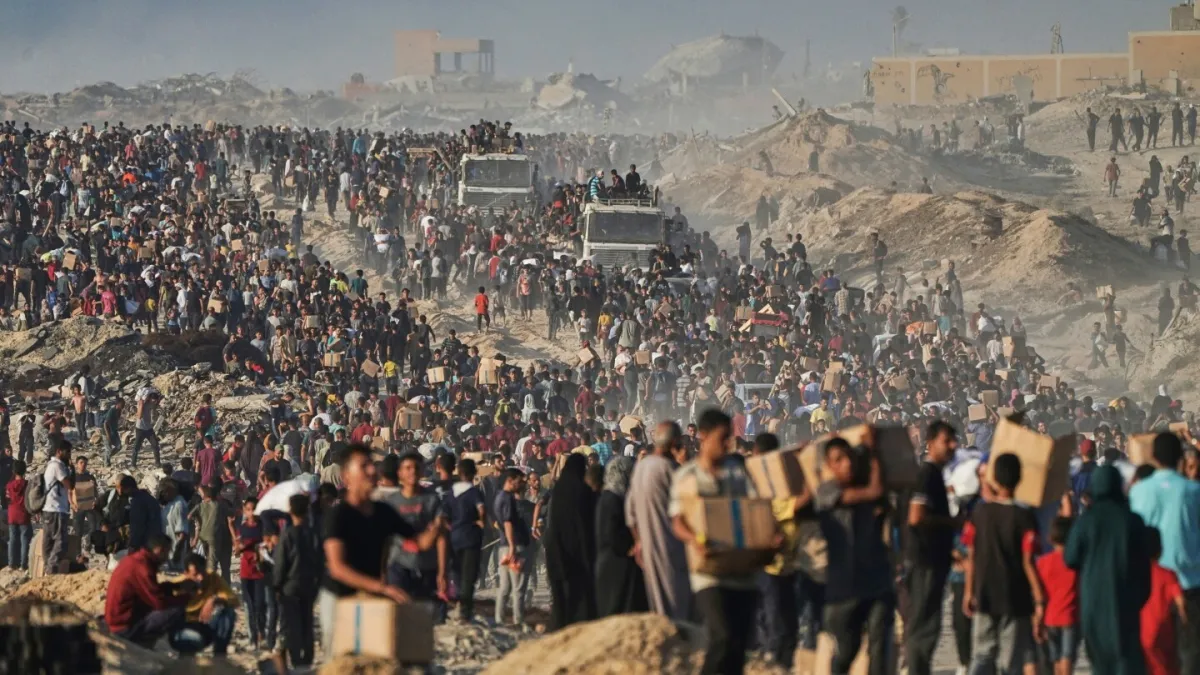
Even as the United States reduces its aid, needs have increased around the world: famine has been reported this year in conflict-ridden parts of Sudan and Gaza, and floods, droughts and natural disasters that many scientists attribute to climate change have claimed many lives or displaced thousands. to move from their homes.
The cuts will have major implications for UN affiliates such as the International Organization for Migration, the World Food Program and UNHCR, the refugee agency. They have already received billions of dollars less from the United States this year than under annual allocations under President Joe Biden's previous administration, or even during Trump's first term.
Now, the idea is for Fletcher's office — which has sought to improve efficiency — to become a conduit for U.S. and other aid money that can then be redirected to those agencies, rather than dispersing Washington's contributions to various individual aid requests.
Fletcher, when asked if he was concerned America's “adapt or die” language, responded: “If the options are adapt or die, I choose to adapt.”
U.S. wants to shore up aid
U.S. officials say the $2 billion is just a first disbursement to help fund OCHA's annual donation appeal, announced earlier this month. Fletcher, who noted the changes in the aid landscape, already reduced the request this year. Other traditional UN donors such as the United Kingdom, France, Germany and Japan have reduced aid allocations this year and called for reforms.
“This humanitarian reset at the United Nations should deliver more aid with fewer tax dollars, providing more focused and results-oriented assistance aligned with US foreign policy,” said US Ambassador to the UN Michael Waltz.
At its core, the reform project will help establish funding pools that can be directed either to specific crises or to countries. needy. Initially, 17 countries in total will be targeted, including Bangladesh, Congo, Haiti, Syria and Ukraine.
Two of the world's most desperate countries, Afghanistan and Yemen, are not included, with US officials citing the diversion of aid to the Taliban and Houthi rebels as concerns about resuming contributions.
Nor is the Palestinian territories mentioned on the list, which officials say will be covered by money from the peace plan. of Trump for Gaza, still incomplete.
The project, which has been months in development, arises from Trump's vision that the world body has great potential, but has not lived up to it, and has - in his opinion - strayed too far from its original mandate of saving lives while undermining American interests, promoting radical ideologies and encouraging wasteful and unaccountable spending.
“No one wants to be a recipient of aid. No one wants to live in a UNHCR camp because they have been displaced by conflict,” Lewin said. “So the best thing we can do to reduce costs, and President Trump recognizes this and this is why he is the president of peace, is by ending armed conflict and allowing communities to return to peace and prosperity.”
_____
Lee reported from Washington and Farnoush Amiri from New York.
_____
This story was translated from English by an AP editor with the help of a generative artificial intelligence tool.