

In Venezuela, the history of a blockade seems to repeat itself
A blockade destined to devastate Venezuela's economy. A fiery Venezuelan leader known for his unusual dance moves in times of distress. A US government that sought to assert its military supremacy in Latin America.
Yes, these descriptions refer to the crisis in which Venezuela is mired.
But they also apply to a military campaign against Venezuela at the dawn of the 20th century, which produced a radical change in the relations of the United States with Latin America.
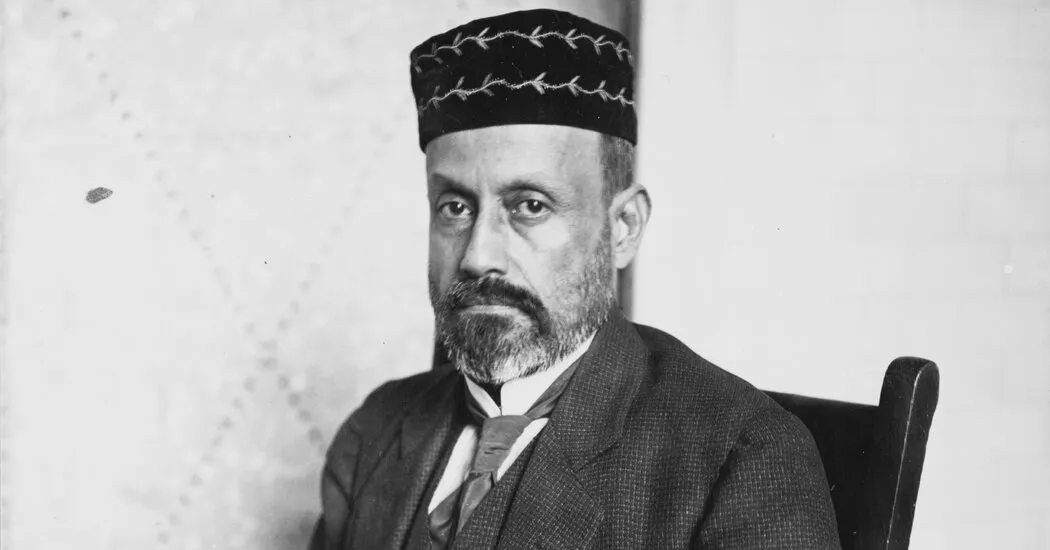
The Venezuela crisis of 1902-03 focused world attention on Cipriano Castro, a party-loving dictator known as the “Lion of the Andes”. His rule in Venezuela was marked by a persistent state of belligerence towards the great powers of the time.
When patience over Venezuela's unpaid debts finally ran out, Germany, the United Kingdom and Italy resorted to what was then known as gunboat diplomacy, and used their naval power to exert pressure in an attempt to make Venezuela meet its obligations.
“It is the closest analogue in many. senses to what is happening today,” said Francisco Rodríguez, a Venezuelan economist at the University of Denver.
The similarities between both blockades highlight how features of the current confrontation, such as Nicolás Maduro's anti-imperialist language and President Donald Trump's push to assert American dominance over the Western Hemisphere, are reminiscent of earlier times.
In Venezuela's first crisis, the blockade unleashed a wave of anti-German hostility in the American press, based largely on fears about the rapid expansion of the German naval fleet and the ambitions of William II, the ill-tempered Kaiser who led Germany.
President Theodore Roosevelt, initially somewhat indifferent to European efforts to collect debts, took note of this sentiment. The United States, with the recent capture of Puerto Rico and the Philippines as spoils of the Spanish-American War, was on the rise.
“The United States had a sense that events were moving in its favor, much like the Chinese view themselves today,” said Jack Thompson, a professor of American studies at the University of Amsterdam.
Roosevelt ordered the largest concentration of American naval power ever seen in the Caribbean up to that point, a sign that the United States The United States was willing to fight to prevent Germany from gaining a foothold in the region.
Germany, along with the United Kingdom and Italy, then agreed to resolve the dispute with Venezuela through arbitration, effectively backing down in the face of growing American military power.
The following year, the American president heavily promoted the Monroe Doctrine, which was a warning to European powers against further colonization in the Americas, by adding his own “Roosevelt Corollary” to that cornerstone of policy.
This corollary, which stated that the United States had the right to exercise “police power” in America when it discovered cases of irregularities, led to decades of military interventions, coups d'état, and direct invasions of Latin American countries.
In November, President Trump proposed his own “Trump Corollary.” He says his government must intervene in the Americas to prevent mass migration to the United States and ensure a hemisphere “free from hostile foreign incursions or ownership of key assets.”
Just as Roosevelt's military buildup was a message to Germany, an emerging power at the time, Trump's blockade of sanctioned oil tankers in Venezuela targets China, which consumes 80 percent of Venezuela's oil exports and has made huge economic inroads throughout Latin America.
There are also many differences between both blockades; After all, 122 years separate them.
One of them is related to the Venezuelan economy. Civil wars and uprisings had ravaged Venezuela, but by the early 20th century the country was relatively closed to world trade and did not need imports to feed its population.
Venezuela is now overwhelmingly dependent on oil, which accounts for more than 90 percent of its export revenues.
Although experts say some of Venezuela's oil revenue is lost to corruption, Maduro's government needs the revenue from this trade to keep forces functioning. armed forces and import basic necessities, such as food.
Another obvious contrast has to do with the United States, which is no longer a medium power, but a colossus with nuclear weapons. And after decades in which the United States prioritized its goals in the Middle East and Asia, Trump is refocusing his attention on the Western Hemisphere.
His campaign of intimidation against Venezuela is just the beginning of this shift, the Trump administration has made clear, part of an effort to reassert American supremacy in a region where leaders have long placed national sovereignty and nonintervention among their core values.
However, there are other parallels between the two blockades. of Venezuela show that history, if it does not repeat itself completely, does rhyme a little.
For example, Cipriano Castro, the Venezuelan leader who led the crisis of 1903. Like Maduro today, he presented his presidency as a line of defense against a new wave of colonialism and as a repudiation of wealthy Venezuelan elites aligned with foreign interests.
At just 1.67 m tall, he often wore high-heeled boots and an extravagant feathered hat to appear taller, as well as oversized military uniforms adorned with medals and huge gold epaulets.
“He has the vanity of a peacock, the temper of a tiger and the habits of a satyr,” a British diplomat once wrote of Castro.
When bankers refused to refinance Venezuela's debt after Castro took power in 1899, he had them put in shackles and paraded through Caracas. The next day, they agreed to finance his government.
“It's a little ironic, but I call it the most successful debt restructuring in Venezuelan history,” said Rodríguez, the economist.
Amid the current confrontation with Washington, Maduro has been singing and dancing, while Castro became famous during the 1903 blockade for holding dances that lasted from dusk until the next morning, according to accounts. era.
Could the outcome of Venezuela's first blockade shed any clues as to how the current standoff might end?
It may be too early to tell.
Castro remained in power for a few years until his ill health (caused by the “debauchery,” according to American diplomats) led him to seek medical care in Europe in 1908.
His right-hand man, Juan Vicente Gómez, then seized power in a bloodless coup supported by the United States. Castro remained in exile until his death in 1924.
Gómez ruled Venezuela with an iron fist and amassed an immense fortune while using spies and agents to control the nation through force and terror. He granted concessions to American oil companies, maintained good relations with world powers, and liquidated Venezuela's foreign debt.
Gómez ruled until 1935, when he died peacefully in his bed at the age of 78.
Simon Romero is The Times' correspondent for Mexico, Central America and the Caribbean. He resides in Mexico City.