

See the First Iceberg of the Times’s Trip to Antarctica
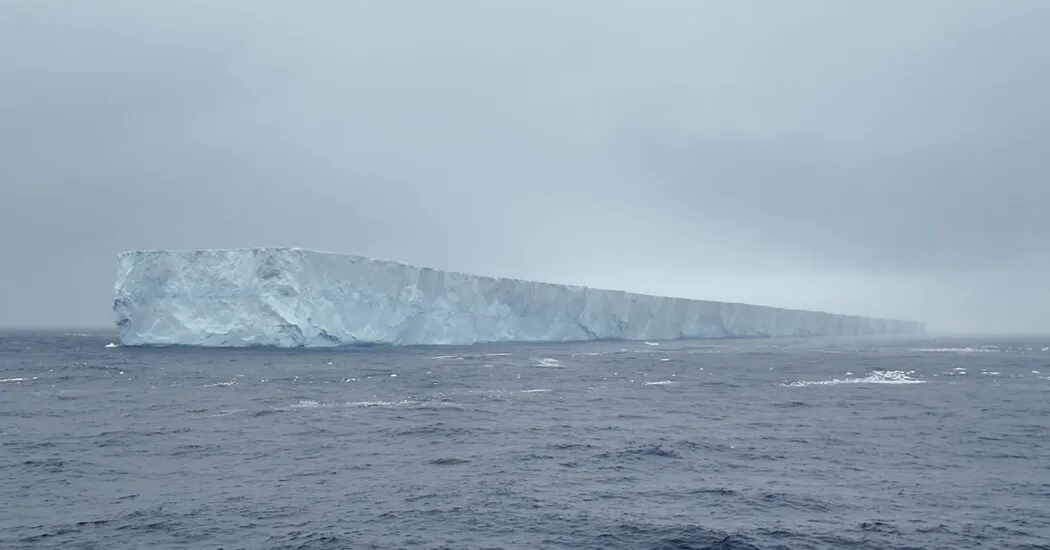
It filled half the horizon, gorgeous and blue and impossibly huge: the first iceberg we spied on our voyage to Antarctica.
New Year’s Eve was our fifth day at sea (even though the calendar date was just four days later than when we left), and we had traveled far enough south from New Zealand to expect to start seeing pieces of floating ice here and there. But nothing really prepares you for your first sighting on a trip, especially not one as spectacular as this.
It looked less like a hunk of ice than an immense Neolithic monument lain on its side, all sharp edges and geometric planes. From the deck of our ship, the iceberg’s nearest end was a perfectly chiseled rectangle, and it extended so far into the distance that the shape of the other end was impossible to make out, like a causeway into the unknown.
As vast objects on a vast oceanic plain, icebergs have a way of defeating the human brain’s ability to gauge size. Or my brain’s anyway. The seasoned polar researchers on this expedition had developed a better feel for it: They pegged this one at half-a-mile- to a mile-long. I would have believed them if they had said it was 10 miles long.

Journey to the Melting Continent
The New York Times is joining an expedition by sea to Antarctica’s fastest-thinning glaciers. Follow along here. And watch our videos here. You can sign up to receive the Climate Forward newsletter, which will feature the latest updates on the voyage.
The iceberg had probably torn away from the Ross Ice Shelf of Antarctica and floated hundreds of miles north, melting bit by bit along the way. To cross paths with the iceberg on the last afternoon of 2025 — it drifting toward a watery demise, us steaming toward its continent of origin — felt special, even if we were sure to see many more icebergs on our way to Thwaites Glacier.
The first sighting of the journey always stays “closest to your heart,” said Dillon Buhl, an electrical engineer at the University of Texas at Austin who has made multiple Antarctic voyages.
Before long, the iceberg had receded into the mist behind us, unseen but not forgotten.