

A Prestigious French Prize Is Reserved for Books About Animals
It was the final event of November’s crowded literary awards season — French publishing’s Oscars, Emmys and Tonys rolled into just a few weeks— and the elegant Salle Goncourt of Paris’s storied Restaurant Drouant was filled with creative luminaries, TV cameras and members of the press.
But one of the most anticipated honorees could not be present.
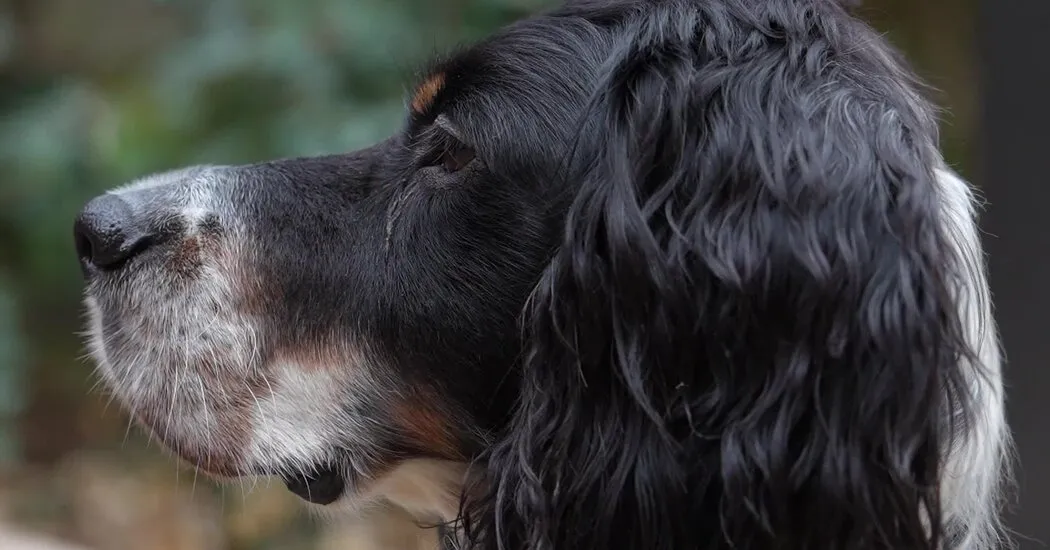
The English setter in question, a therapy dog and the subject of this year’s 30 Millions d’Amis prize for nonfiction, was at the bedside birthday party of a hospital-bound 2-year-old. In his absence, Sandra Kollander, the human author of “Snoopy, un Chien Qui Fait du Bien” (“Snoopy, a Dog Who Does Good”), accepted the 1,000 euro purse, which, the prize dictates, must be donated to an animal charity.
“The animal is a vector of humanity,” Kollander said in an interview shortly after accepting her medal, alongside representatives from the Institut Curie Paris hospital, Snoopy’s place of work, which specializes in cancer treatment. “We experience extremely strong emotions, sometimes even overwhelming. We need to breathe; we need a gentle, joyful presence. A dog gives us that.”

Warm with walnut paneling and punctuated by vitrines showcasing etchings and antique manuscripts, the Salle Goncourt speaks of ceremony. Since 1914 it has played host to the judging of the namesake literary prize, for best French-language books of the year, and, since 1926, to the Prix Renaudot.
For decades, the Prix Littéraire 30 Millions d’Amis has been given here as well. In a country whose love of books, argument and, accordingly, literary prizes is matched only by an affection for pets, the “Animal Goncourt” is certainly the sweetest such rite, but it’s no less prestigious for that.
“People can write with great emotion and honesty about their animals,” said Didier Decoin, the secretary of the Académie Goncourt and a judge for the 30 Millions d’Amis prize. “And who better to talk about the fabulous relationship between animals and men than writers, and philosophers?”
The award has its roots in a television program of the same name, first broadcast in 1976.
The show was the brainchild of the journalist Jean-Pierre Hutin and his wife, Reha. According to Reha Hutin, now 80 and the elegant chair of the jury, she and her husband (who died in 1996) were animal lovers hoping to bring attention to the treatment of pets by “filming domestic animals as though they were the wild animals of documentaries, with the same respect.”
The series would become one of the longest-running French TV programs of all time, featuring both celebrity and civilian pets while highlighting the cause of animal welfare. Since 1995, 30 Millions d’Amis has also been a highly influential foundation.
The title (“30 Million Friends” in English) meant nothing, Hutin explained: “Just a number that sounded good; of course there are far more animals than this in France!”
While the couple had serious reform in mind, they wanted to spread their message gently. “The militant approach was not for us,” Hutin said. “I love Brigitte Bardot, but really she takes it a bit far.”
In 1978, largely inspired by the number of writers who’d shared their animals on the television show, the magazine “30 Millions d’Amis” was born.
This multimedia effort aimed straight at the heart. “We French have an interesting attitude toward animals,” Hutin said. “On the one hand, we adore them, we take them to cafes, but on the other, until 1995, we still operated under this Cartesian definition of the animal as movable property.”
“Trente Millions d’Amis” — the brand, the idea and the foundation — was pivotal in successfully advocating for a legal language shift, with animals now considered “sentient beings.”
In 1982, the prize itself was created. Seated in the official engraved chairs allocated to judges of the Prix Goncourt, the first jury included the Hutins and Decoin along with France’s minister of culture, several publishers and a number of eminent novelists and journalists.
Jean-Louis Hue won, for the treatise “Le Chat Dans Tous Ses États” (“The Cat in All Its States”).
The prize has since expanded to include fiction as well as nonfiction. Subsequent winners have included plenty more books about dogs and cats, but also such titles as “La Sagesse des Élephants” (“The Wisdom of Elephants”), “Comment Parler Baleine” (“How to Speak Whale”), “Au Nom des Requins” (“In the Name of Sharks”) and, in French translation, the tiger-centric international sensation “Life of Pi.”
“This has become by far the most important, if not the only, literary prize dedicated to animals and animal welfare,” said the journalist Frédéric Vitoux, a judge of 20 years’ standing. “This prize seems important to me, even essential, because it helps to raise awareness among a wide audience about the animal world. And it does so without demagoguery.”
The nonfiction finalists for the Prix Littéraire 30 Million d’Amis.The winner was “Snoopy, Un Chien Qui Fait du Bien” (back row, second from left).
Credit...Prix 30 Millions d'AmisEleven novels and 10 works of nonfiction were on this year’s shortlist, including “L’Élégance Animale,” “Le Sourire du Chimpanzé” and “Trente Millions d’Orgasmes,” an examination of the erotic lives of the zoological world.
“Snoopy” was the unanimous nonfiction choice. Not only did the book meet the panel’s stringent requirements for literary merit, but it served to advance a cause beloved of the Fondation 30 Millions d’Amis: bringing more animals into French hospitals.
The prize has a social dimension, certainly. “Over the course of 35 years, I have observed that the jury has become influential in advocating for animal rights,” said Irène Frain, a judge, “because publishers are now taking a serious interest in the subject.”
But the distinctive seal on a book’s cover (a stylized “30” in which arms cradle the silhouette of a German shepherd) also often boosts sales. The award helped “Son Odeur Après la Pluie” (“His Smell After the Rain”), Cédric Sapin-Defour’s 2023 love letter to a lost dog, sell more than 300,000 copies, according to Teresa Cremisi, a publisher and a judge for that year’s prize.
This year’s winning novel, Christian Signol’s “D’une Beauté Sauvage” (roughly, “A Wild Beauty”), takes on a thorny issue in contemporary France: the reintroduction of wolves to the Limousin region, and the subsequent clashes between farmers, shepherds and animal advocates.
“He is a novelist who already enjoys considerable popular success,” Vitoux said, “but whom the literary establishment tends to underestimate, perhaps for that very reason. Which is unfair.”
In an interview, Signol spoke to the importance of being recognized by such a group. “This prize signifies that the most effective way to defend the cause of animals is to adopt their perspective,” he said. “This is what I did in several chapters of this novel, by putting myself in the place of a wolf, experiencing its gaze, its instincts and its suffering. It’s a literary technique that Jack London used in ‘White Fang.’”
Judges serve, basically, for life. But perhaps the most famous member of the panel was notable in his absence: For the past three years, the controversial writer Michel Houellebecq has declined to emerge from self-isolation to judge the prize — although it was for many years the only literary jury on which he’d serve, and the only event at which the press knew he’d reliably appear, often with his corgi, Clément, in tow.
“A crowd of journalists would always descend upon the dining room, rushing to interview him,” Frain remembered.
Indeed, Houellbecq was a fan long before he was a judge; after winning the (human) Goncourt Prize, he mentioned the magazine and its offshoots so consistently in interviews that Hutin was moved to invite him. “He very much misses it,” she said.
The adjudication itself is fast and furious: The judges binge a shortlist of animal books, then debate the winner over, this year, a pescatarian lunch of salmon and coquilles St.-Jacques.
Given their ages and long tenures, there is talk about bringing on new and more diverse blood. In the Salle Goncourt, while waiting to announce the 2025 winners, the current panel bandied about names.
“Oh, that young man is wonderful!” Hutin remarked at one point. “A rapper! Very adept at social media. And, of course, an animal lover.”
Animal companions used to join the human judges for the ceremony, until there were incidents. An overwhelmed ferret bit its human. Then, a few years ago, a cat got spooked, drapes were climbed, chairs broken; and the panel regretfully banned all but the best trained.
Vitoux said he became involved because of his passion for cats, which encompasses several works and came up in his biography of Céline. “I love cats, I live with cats, and it is for me impossible to live without a cat in the house,” he said. “Without a cat, it becomes a dead house.”
“But anyway,” he added, “I have been very glad to give our prize to a dog, Snoopy.”